
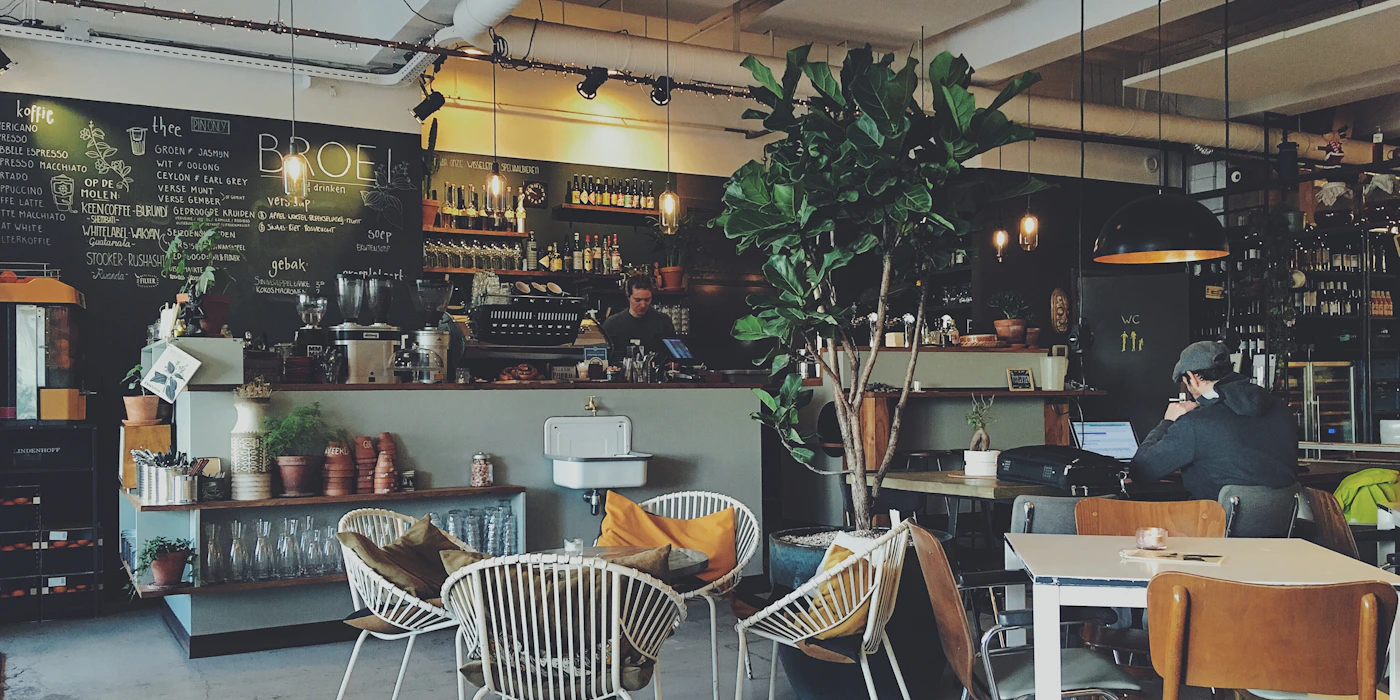
If there's one thing worth knowing before you start dating in the Netherlands, it's this: the Dutch say what they mean. The national reputation for directness is entirely earned, and once you stop bracing against it, it turns out to be one of the most dating-friendly traits a culture can have. Where some countries run dating on hints, ambiguity and the fear of seeming too keen, the Dutch are more likely to tell you plainly that they're interested — or that they're not. For anyone tired of decoding mixed signals, that bluntness isn't rude. It's information, delivered for free.
This is an honest, data-led guide to how dating actually works in the Netherlands, written for the kind of person who'd rather know the rules than guess at them. We'll cover the directness and how to read it, the famous "going Dutch" question of who pays, the apps people really use, the borrel-and-café social rhythm, the regional differences, and what a Dutch first date tends to look like — all built around one finding from the research: clear communication, the thing the Dutch do by default, is also one of the better predictors of relationships that last.
The honest through-line for the country is this: the Netherlands dates directly, splits the bill, meets online and socialises over a beer. Read those four facts correctly and the rest follows.
"Dutch directness feels brutal for about a week, then you realise it's a gift. You spend almost no energy decoding mixed signals, because there mostly aren't any. People tell you where you stand."
— Morten Andersen, LoveCertainThe honest truth about dating in the Netherlands
The first truth is the directness, and it's worth understanding mechanically rather than as a cliché. Dutch culture prizes plain speaking and treats sugar-coating as faintly dishonest, so feedback — including romantic feedback — arrives unvarnished. A Dutch date is more likely than most to tell you outright that they had a nice time and want to see you again, or that they didn't feel a connection. This is anxiety-reducing once you adjust: you waste far less time in the agonising limbo of "do they like me?" The flip side is that you're expected to be equally straight back. If you're interested, say so. Vagueness reads as game-playing here, and it doesn't land well.
The second truth is that the Netherlands is one of the most thoroughly online dating markets in Europe — highly connected, app-fluent, digitally comfortable. Across the developed world, the sociologist Michael Rosenfeld and colleagues have documented that meeting online has overtaken every other route to become the most common way couples now find each other, and the urban, internet-saturated Netherlands sits squarely on that curve. There's even a homegrown twist worth noting: Breeze, a Dutch dating app, was built specifically to get people off their phones and onto real planned dates quickly — a small sign that even the local app market has noticed swiping forever isn't the point.
The third truth is the social rhythm, and it's friendlier to a slow build than the directness might suggest. Dutch social life runs heavily on the borrel — the relaxed, after-work or weekend drinks gathering — and on the bruine kroeg, the cosy old "brown cafés" that anchor neighbourhoods. A lot of Dutch couples first orbit each other through these group settings, through student associations, sports clubs and circles of friends, well before anything is declared. That matters because it lines up with one of the most reliable findings in relationship science: the propinquity effect — documented by Festinger, Schachter and Back back in 1950 — that we bond with the people we're near and see repeatedly. The Dutch socialise in repeating groups, which quietly does a lot of the introducing.
Dating customs: what to actually expect
Broad patterns, not laws — plenty of Dutch people do none of this. But these are the conventions you're most likely to bump into.
Expect to be told fairly plainly whether someone is interested, and be ready to say the same. The upside is clarity and very little second-guessing; the adjustment is that you can't hide behind hints. If you like someone, a simple, honest "I'd like to see you again" is exactly the right register — and far more effective here than playing it cool.
Splitting the bill, or each paying for what they had, is genuinely the default — the phrase exists for a reason, and it's tied to a strong cultural value of egalitarian independence rather than stinginess. Offering to split is normal and not unromantic; insisting on always paying can even read as slightly old-fashioned. Our guide to who pays untangles the moment so it doesn't become a thing.
The Netherlands is among the more gender-egalitarian dating cultures: initiative, planning and paying are shared, and either person asking the other out is unremarkable. For shy daters this is good news — there's no rigid script saying one person must do all the pursuing. Whoever's keen is allowed to say so.
A lot of connection here starts in groups — borrels, sports clubs, student associations, friend circles — and moves to one-on-one later. If you've just arrived, getting into a recurring group activity is the single most effective move. How to meet people offline is the habit to build in a culture that introduces people through its social fabric.
For the mechanics of early dating that travel well across all of this, our complete first date guide is a good companion, and the directness here makes the early stages genuinely less fraught than in cultures that run on ambiguity.
The apps Dutch people actually use
The Netherlands is a mature, app-fluent market, and meeting online is thoroughly mainstream — Pew Research has documented how central the apps have become across comparable countries. Knowing what each one is broadly for saves a lot of pointless swiping.
Tinder, Hinge and Bumble dominate, especially in the cities and among students and internationals. Hinge skews toward people after something serious; Bumble has women message first; Tinder is the largest and most casual. They all work — and in a direct culture, you can often just ask early what someone's actually looking for, which the apps elsewhere make weirdly hard.
Breeze, built in Amsterdam, is worth a mention because its whole premise is anti-swipe: it matches you and then books an actual date at a real venue, pushing you off the phone fast. It's a small, telling local rebellion against the endless-feed model — and philosophically close to how we think dating should work.
The big apps are built to keep you swiping, not to get you off the app and into a relationship — their revenue depends on your return visits. That's the argument of our piece on why dating apps don't want you to find love. And per Eli Finkel's research, their matching algorithms predict real chemistry far more weakly than the marketing claims. Use them as one tool, not the whole plan.
For a fuller breakdown of what each platform does well and badly, our guide to dating apps goes app by app, and the online dating cluster collects everything we've written on dating online without losing your mind.
100% free until January 2028
LoveCertain matches you on values, life stage, attachment and communication — the four things that predict a lasting relationship. No card required.
One country, several rhythms: regional differences
The Netherlands is small but not uniform, and the dating texture shifts as you move around it. A few honest, broad-strokes contrasts, offered as starting points to test rather than stereotypes to trust.
Amsterdam is fast, international and expat-heavy, with the most app-driven scene in the country and a transient population that comes and goes. English will carry you completely. The trade-off is the big-city churn — easy to meet people, harder to land — so a recurring real-life anchor matters. Our Amsterdam guide goes deep on where to actually meet people.
Rotterdam is famously direct even by Dutch standards — modern, unpretentious, working — while Utrecht and the other university cities have dense, association-driven student social lives that are among the easiest structures to meet people through. Younger, more rooted, and less transient than Amsterdam.
The southern provinces — historically Catholic, famous for Carnival — have a reputation for being warmer, more openly sociable and a touch less blunt than the Calvinist north and west. A gentler on-ramp for someone who finds the full force of Dutch directness a lot at first.
What to expect on a first date
The classic, low-key Dutch first date: a beer or a wine in a cosy bruine kroeg, no fixed end time, relaxed and unpretentious. It suits the directness — easy to keep it to one drink if there's no spark, easy to extend if there is. The setting is warm and the stakes are low, which is exactly what the research recommends for a first meeting.
In a country built for bikes, a coffee followed by an easy ride along the canals or through a park is a genuinely Dutch low-pressure date — side by side, plenty to look at, and a natural pace. The flat, compact cities do half the work. Just agree the route so nobody's racing to keep up.
When the sun finally shows up, the Dutch decant onto every available terrace, and a drink in the long northern evening light is hard to beat. Sociable, cheap and forgiving, with the warm-weather mood doing the heavy lifting. Make the most of it — the season is short and everyone treats it as precious.
A full dinner is a big time commitment for a first meeting. Save it for a second or third date, when you already enjoy each other's company and a long evening at the table is a pleasure rather than a test. Bank the conversation on a drink or a coffee first.
What to watch for
The honest hazards of dating in the Netherlands aren't really about the directness — that mostly helps. They're about misreading Dutch reserve in the early stages and underrating how much the planning culture matters. Neither is cause for cynicism, just for a little calibration.
The Dutch will tell you clearly if they're interested, but close friendship and deeper warmth can still build slowly — the famous "coconut" pattern of a tough outer shell and a soft centre. Don't mistake an initially businesslike, scheduled approach for coldness. Clarity comes quickly here; intimacy still takes the time it takes everywhere.
The Netherlands runs on calendars, and "let's see each other soon" can quite literally mean scheduling a date two weeks out. This isn't disinterest — it's how a planning culture shows it takes something seriously. Suggest a concrete day rather than waiting for spontaneity, and don't read the diary-management as a lack of enthusiasm.
The science on lasting love is unromantic but steady, and it happens to flatter the Dutch approach. The Gottman Institute's decades of research find that how couples handle conflict and everyday "bids for connection" — clearly, without contempt or stonewalling — predicts whether they last far better than early intensity does. A culture that says what it means has a real head start on exactly that.
A more certain way to date
Here's what the Dutch approach gets right that flashier cultures miss: clarity is kind, and saying what you mean saves everyone months. You don't need to learn an elaborate game here. You need to be as straight as the people you're dating — honest about your interest, concrete about plans, and patient while the warmth builds behind the directness. The bluntness that feels like a wall at first is the thing that makes this one of the easier places to date once you stop fighting it.
That clarity is the whole idea behind how we built LoveCertain. Instead of an infinite feed of strangers and mixed signals, we match on the things that actually predict whether two people last — values, life stage, attachment style, and how you each communicate — and we only show matches above seventy percent compatibility. You can read the detail on how it works; if you want to understand why early intensity misleads people, our guide to attachment styles and the attachment and attraction hub explain it plainly; and because the Dutch make their interest explicit, the principles in our communication cluster land naturally here.
The Netherlands will give you the directness, the bikes, the borrels and the brown cafés. Whether you turn that into something lasting comes down to the same quiet decision everywhere: to be honest about what you want, and to give one good thing the time and the calendar slots to grow.
Weekly insights on attachment, relationships and finding lasting love.
Related reading


100% free until January 2028
You’ve got the date sorted — LoveCertain helps with the who, matching you on values, life stage, attachment and communication. No card required.