

Budapest gets sold to outsiders as a backdrop: ruin bars, cheap pints, a stag party that got out of hand, a thermal bath you stumble into hungover. That reputation is good for the tourist economy and close to useless if you actually live here and want to meet someone. So let's swap the stag-do postcard for the structure. What really governs dating in Budapest isn't the party district — it's four unglamorous facts most guides skip: a city of roughly 1.7 million people split clean in two by the Danube, with a hilly, residential Buda on one bank and a flat, dense, café-packed Pest on the other; a cost of living low enough that a short, cheap first date carries almost no financial risk; a café and bathhouse culture engineered, almost by accident, for the kind of repeated, low-stakes contact relationships actually need; and a vast student and young-professional population that keeps the place young and in constant flux. Read those four correctly and Budapest stops being a hen-do meme and starts being one of the most quietly dating-friendly capitals in Europe.
Begin with the evidence, because it points where the clichés don't. One of the most replicated findings in relationship science is the propinquity effect — we form bonds with the people we are physically near and see repeatedly. Festinger, Schachter and Back documented it in 1950 in a study of a student housing complex, where sheer physical proximity predicted friendship far better than shared interests did. It rests on the mere-exposure effect, which Robert Zajonc later demonstrated in the lab: we reliably warm to faces we keep encountering, with no persuasion required. This is where Budapest's density becomes an advantage. Pest in particular is a flat, walkable grid where the same café, the same tram, the same ruin-bar courtyard puts you in front of the same faces week after week — and the city's famously low prices mean you can keep going back without thinking about it. Propinquity needs repetition, and a cheap, dense city hands you repetition almost for free. What it can't hand you is the nerve to say something the fourth time you've seen the same person nursing a coffee at your local — and that, as always, is a personal problem, not a civic one.
"The river does something subtle to Budapest dating: it quietly sorts people into a Buda life and a Pest life. Know which bank your routine lives on, because the propinquity effect only works on the side of the water you actually inhabit."
— Morten Andersen, LoveCertainHow Budapest actually shapes the dating math
Here's the honest version. The Danube isn't just scenery — it's a structural fact that organises the city's social life. Buda is hilly, greener, quieter, more residential and family-leaning; Pest is flat, denser, younger and where most of the cafés, bars and nightlife sit. Crossing is easy — the bridges and the tram and metro network make it a short hop — but people's routines still tend to settle on one bank, and the propinquity effect only compounds on the side you actually move through each week. That's the first thing to get right: pick the bank your daily life genuinely lives on, and date within reach of it. The complicating news is that Budapest is also a high-churn city. A large student population at ELTE, Corvinus, BME and the international medical schools arrives in autumn and thins out over summer, and a steady current of young expats and digital nomads cycles through on six-month and one-year horizons. A meaningful slice of any social circle here is mid-arrival or mid-departure at any given moment — which is a reason to build repeated contact quickly while the overlap lasts, not a reason for cynicism.
Then there's the bathhouse texture, which genuinely sets Budapest apart. Few cities have a social institution as distinctive as the thermal baths — Széchenyi, Gellért, Rudas — where locals soak, play chess and talk for hours. The honest read on the apps, per Eli Finkel's research, is that their matching algorithms predict real-world chemistry far more weakly than the marketing implies, so in a city this rich in unforced, hours-long social venues, face-to-face time beats time spent filtering profiles. And there's a real self-expansion angle Budapest offers that flatter cities can't: the Buda hills, the Danube bend and Margaret Island all sit at the end of a tram or HÉV line. Arthur Aron's work on self-expansion found that couples who do novel, slightly challenging things together feel more alive than those who don't — and a hike in the Buda hills or a slow afternoon drifting between bath pools is exactly that kind of novelty sitting on the city's doorstep.
Across the developed world, work by sociologist Michael Rosenfeld and colleagues finds that meeting online has become the single most common way couples now find each other, overtaking introductions through friends. In a churny capital with a big student intake and a rotating expat layer — where established local circles can be slow to open to outsiders — apps fill a genuine gap: they manufacture a first meeting between people whose weekly loops don't otherwise overlap. The honest limit is that apps are good at the first meeting and weak at producing the fourth. Geography and routine — your bank of the river, your district, your local café — decide whether the fourth one ever happens.
Best districts to meet people
The dense, walkable heart of young Budapest, and the home of the ruin bars. Behind the party reputation is a real neighbourhood of specialty-coffee places, small restaurants, courtyards and independent shops that draws a recurring local crowd, not just a weekend stag one. If you live central, this is where the propinquity effect works for free — but go to the ruin bars early in the evening, when you can still hear each other, not at 1am.
The grand central spine of Pest: the inner city, the leafy stretch of Andrássy út, and the café-lined streets around Deák Ferenc tér where the metro lines all meet. Historic coffee houses, wine bars and a steady after-work crowd make it the city's most reliable terrain for a short, central, well-connected first date — exactly the repeatable ground propinquity rewards.
An up-and-coming, increasingly young district just south of the centre, anchored by Corvinus University and the café-and-restaurant run along Ráday utca. A routine-driven local crowd of students and young professionals, a riverside edge by the Bálna, and prices that still undercut the tourist core — a strong, underrated base if you want a neighbourhood that doesn't empty out the moment the day-trippers leave.
Quieter, hillier, greener, and more residential — Buda is where a lot of Budapest's actual home life happens. The cultural strip along Bartók Béla út in the 11th has become a genuine café-and-gallery anchor, and Castle Hill and the riverbank give you endless walking. If your daily routine lives on this bank, build your repeated-contact loop here rather than commuting your social life across the water every night.
First date spots that respect the logistics
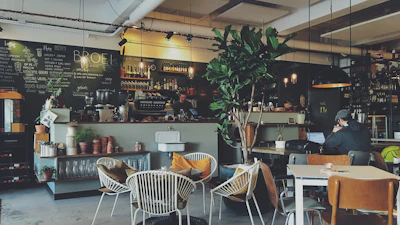
Budapest's café culture runs from grand historic rooms to tiny specialty roasters, and almost all of it is cheap. A coffee lets you sit as long as it's clicking, leave the moment it isn't, and spend almost nothing either way. The understated option, and often the best — it keeps the first meeting brief and gives the propinquity effect a walkable district to repeat in.
The walk-and-talk is one of the most reliably low-pressure date formats anywhere, and the river is Budapest's great free amenity. Stroll the Pest embankment, cross the Chain Bridge, end with a view of the Parliament lit up. You set the pace, pause on the rail, and exit cleanly onto a tram — no bill-and-bar ritual required.
The car-free island in the middle of the Danube is built for a low-stakes daytime date: flat paths, gardens, a running track, rentable bikes, and a clear shape with a natural turning point. Short, cheap, full of things to point at, and a clean exit back to either bank. Forgiving terrain for a first meeting.
A compact museum removes the "interviewing each other" problem and hands you shared things to react to — ideal when a grey Budapest winter rules out the outdoors, which it regularly will. Keep it to a floor or two, not a forensic sweep, so it stays an hour and not a marathon.
The ruin bars are a genuine Budapest original, and at 6pm — courtyard light, half-empty, mismatched furniture — they're a charming, low-key first-date room. The single caveat is timing: by late evening they're loud and packed, and no place to actually hear someone. Go early, leave before it turns into a club.
Soaking at Széchenyi or Gellért is one of the most Budapest things you can do together — but swimwear and several hours with someone you barely know is a lot of exposure for a first meeting. It's a wonderful, novel second or third date in Aron's self-expansion sense; save it for once you already know you like them, and there's no awkward way to bail early.
The view over the whole city from Gellért Hill, or a walk in the green Buda hills via the cogwheel railway, is novelty and movement in one — exactly what self-expansion rewards. But it's a committing half-day with nowhere to bail, so bank it once you know there's something to build on.
A sit-down dinner with the river and the castle lit up is a lovely second date and a high-pressure first one: too long, too much eye contact before you know whether you want it. Bank the conversation on something shorter and cheaper first, then graduate to the table.
100% free until January 2028
LoveCertain matches you on values, life stage, attachment and communication — the four things that predict a lasting relationship. No card required.
Where people actually meet (beyond the apps)
Apps are well used in Budapest and they work fine for generating a first meeting — genuinely useful in a capital this full of recent arrivals whose circles haven't yet overlapped. But the propinquity research points at something an app can't hand you: repeated, unforced contact at a time you're reliably free. The people who date well in Budapest tend to have a recurring anchor — a regular table at a café, a language exchange (the city runs plenty), a climbing gym, a board-game or quiz night, a Danube-side running club, a volunteer shift. In a churny city where local circles can be slow to open, the steadiness matters more than the activity. If you only change one thing, make it this: join something that meets on a schedule you can actually keep, on the bank of the river you already live on.
The classic Budapest mistake is treating the whole city as one pool and commuting your social life back and forth across the Danube. The propinquity research says proximity plus repetition is the whole formula — so a date that's a five-minute walk from your flat will happen again far more readily than one that needs a tram, a bridge and forty minutes. Pick your bank, pick your district, and let the overlap compound.
Keeping a first meeting to an hour near a shared district lowers the perceived cost for both people, and Budapest's low prices make that almost frictionless — a coffee or a walk costs next to nothing. Short and soon beats long and someday: it lets you find out quickly whether a second date is worth it, before a high-churn city moves one of you on.
For the meeting itself, the fundamentals travel: our notes on first date conversation apply in a ruin-bar courtyard exactly as they do anywhere, and the daytime date ideas guide leans into the walk-and-coffee format Budapest rewards most. If you're weighing how this city compares to its central-European neighbours, the Vienna guide is the closest like-for-like — a grander, pricier, more reserved capital just down the Danube — the Berlin guide shows a bigger, faster version of the same young-and-churny dynamics, and the Amsterdam guide rounds out the walkable-capital comparison. For the bigger picture on building relationships rather than collecting matches, the online dating cluster and our notes on the early stages of dating pull the research together.
One myth worth retiring: Budapest dating is not just "ruin bars and stag parties." What gets blamed on the city — that it's all tourists and hen-dos and you can't meet anyone real — is usually a mix of student churn, a grey winter that tempts everyone indoors, and a habit of only going out to the loudest rooms at the latest hours. Keep your weekly loop tight and on one bank, refuse to go dormant when the cold sets in, and treat the baths, the island and the Buda hills as openings rather than scenery — and most of that supposed difficulty turns out to be ordinary effort that nobody made. (For anyone dating across a real distance — common when an Erasmus year ends or a contract moves on — the logistics in our long-distance relationship guide carry over almost intact.)
Weekly insights on attachment, relationships and finding lasting love.
The short version
Dating in Budapest gets easier the moment you stop treating it as a stag-do backdrop and start using the city's real strengths — a cheap, dense, walkable grid, a café and bathhouse culture built for repetition, and hills and islands a tram ride away. Pick the bank of the river your life actually lives on, choose a district near home — District VII, the centre, Ferencváros, or the Buda strip — and date within reach of it. Build one recurring, nearby commitment that survives the grey months so the propinquity effect always has somewhere to work. Keep first dates short, daytime where you can, and cheap, and treat the baths, Margaret Island and the Buda hills as openings rather than postcards. None of this is romantic advice in the usual sense — it's logistics. But in a city split by a river, logistics is the romance. For the evidence on what actually builds lasting relationships, see how our matching works.
For more on how people meet today, the Pew Research Center keeps a clear, current overview of online dating and the trends behind it — useful context for a capital built largely out of people who arrived for a degree or a job and decided to stay.
Related reading


100% free until January 2028
You’ve got the date sorted — LoveCertain helps with the who, matching you on values, life stage, attachment and communication. No card required.